
Health plan cost mechanics
Premium vs. deductible: compare the whole cost design
The premium keeps coverage active; the deductible is only one part of cost sharing. Put both into an annual plan comparison.
The premium is the price paid to keep coverage active. A deductible is an amount a member may need to pay for certain covered services before the plan begins sharing those costs. Neither number describes the entire plan.
Many plans cover selected services before the deductible, use separate medical and prescription deductibles, or apply copays and coinsurance differently. Read the SBC service rows and the detailed policy instead of assuming every service follows one deductible.
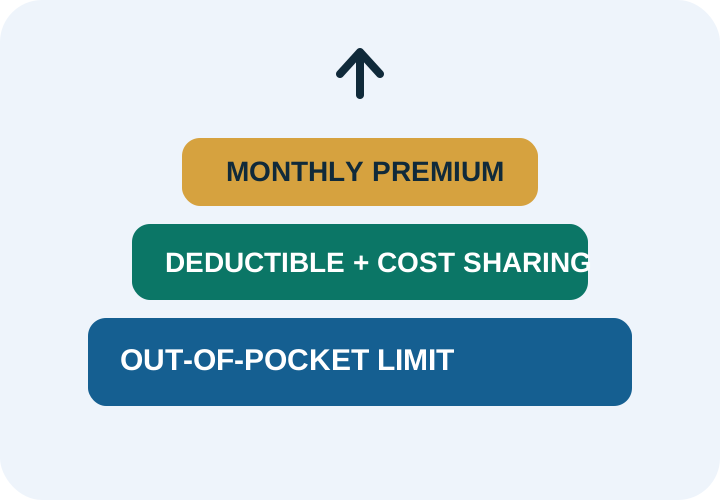
Use the household's displayed amount for the same plan and application facts.
A planning boundary, not a prediction; excluded and outside-network costs may sit beyond it.
| Component | What it does | What to verify |
|---|---|---|
| Premium | Keeps coverage in force | Gross versus net amount, household members, payment frequency |
| Deductible | Applies before the plan shares specified costs | Medical versus drug, individual versus family, services before deductible |
| Copay | Fixed amount for a covered service or drug | Whether it applies before/after deductible and at which provider or tier |
| Coinsurance | Percentage of the allowed amount | Network, deductible timing, and allowed amount basis |
| Out-of-pocket limit | Caps qualifying member spending under the plan's rules | In-network scope, family structure, and excluded charges |
Scenario method
Compare the plan, not two isolated numbers
- Build an annual premium figure for each plan.
- Add known recurring prescriptions and visits using the exact plan terms.
- Check large-service cost sharing and authorization rules.
- Compare the in-network individual and family out-of-pocket limits.
- Verify important providers before assigning value to a network.
- Keep non-covered and out-of-network exposure outside the protected boundary.
Verification links