
Provider access
An HSA does not create a provider network or change a service's coverage. Those terms come from the health plan paired with it.
Tax-advantaged account, not insurance
A plain-language guide to the tax-advantaged account, not insurance and the evidence the label cannot replace.
An HSA is a tax-advantaged account used for qualified medical expenses by an eligible individual. It is not a health insurance plan. Eligibility to contribute depends on current federal rules and qualifying coverage.
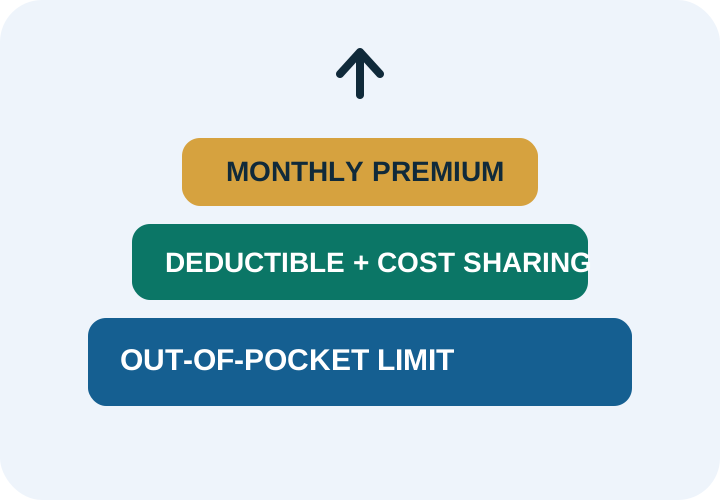
Separate plan costs from account cash. Record premiums, deductible, and cost sharing for the health plan, then separately record contributions, fees, balance, and qualified distributions for the HSA.
Access and rules
An HSA does not create a provider network or change a service's coverage. Those terms come from the health plan paired with it.
Tax rules, annual limits, and eligibility can change. Use current IRS Publication 969 and qualified tax advice for an individual's situation.
Document checklist
Comparison method
Recheck this label and every linked document before a new coverage year, after a move, when a regular provider or prescription changes, and before important planned care. A saved directory or formulary is a dated snapshot. If records conflict, ask the plan which document controls and keep the written answer with the exact plan ID.
Verification links