
Provider access
HDHP status does not identify the network. The plan may use HMO, PPO, EPO, or another network pattern.
Cost-sharing and tax-eligibility concept
A plain-language guide to the cost-sharing and tax-eligibility concept and the evidence the label cannot replace.
A high-deductible health plan has a deductible and out-of-pocket structure that meets applicable definitions. Only an HSA-eligible plan under current federal rules permits HSA contributions; a marketing description of “high deductible” is not enough.
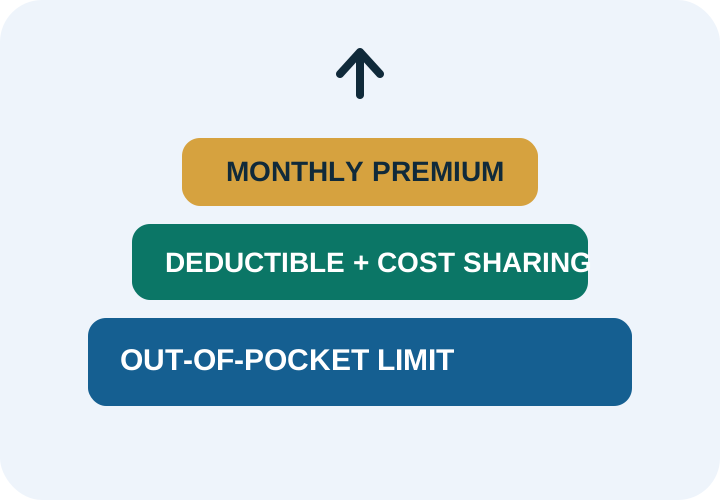
Compare the premium savings, deductible exposure, services before the deductible, employer contributions when applicable, and the full in-network protection limit.
Access and rules
HDHP status does not identify the network. The plan may use HMO, PPO, EPO, or another network pattern.
Verify current HSA eligibility and contribution rules with IRS guidance. Do not assume every high-deductible plan is HSA-qualified.
Document checklist
Comparison method
Recheck this label and every linked document before a new coverage year, after a move, when a regular provider or prescription changes, and before important planned care. A saved directory or formulary is a dated snapshot. If records conflict, ask the plan which document controls and keep the written answer with the exact plan ID.
Verification links