No signupNo phone numberEntries stay on your deviceOfficial source links
You can research Marketplace plans without beginning with a phone call. HealthCare.gov offers public plan and price browsing, and state-based Marketplaces provide their own official routes. The preview is useful for building a shortlist; final prices, savings, eligibility, and enrollment depend on the official application.
Use a dedicated comparison sheet and avoid submitting contact information to an unknown seller merely to see a generic list. Confirm the domain, privacy notice, and role of any non-government site.
No-call research path
Preview, document, then decide whether you need help
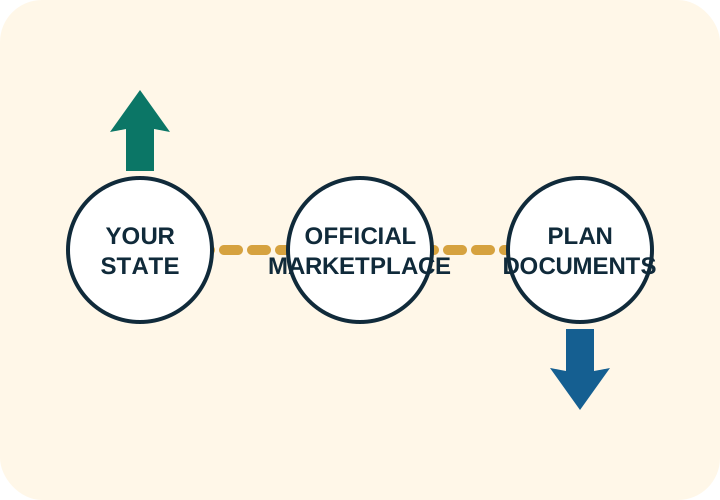
Find the state route. Use the CMS map or HealthCoverUSA state directory to locate the official Marketplace.
Browse public results. Enter only the information the official preview requires and inspect the displayed plan menu.
Open documents. Save the SBC, provider directory, formulary, quality rating when available, and plan ID.
Build a shortlist. Compare no more than a manageable set with the same rows.
Use official help if needed. The Marketplace provides assistance channels; verify any agent or broker role before sharing information.
Health information, income, household details, and identifiers can be sensitive. Share them only when necessary on a verified official or authorized enrollment channel. HealthCoverUSA's worksheets run locally in the browser and do not submit entries to us.
If a website promises every plan, a guaranteed subsidy, or a quote without identifying the plan, issuer, service area, and year, treat the result as incomplete. Use the plan's official documents and the Marketplace result as the controlling evidence.
Private research
Compare health insurance without phone calls or a lead form
Start with the official public plan preview for the household's state and ZIP code. Save the plan IDs and documents, then compare the plans locally on this device. If you later choose help from a broker or commercial partner, verify the organization, license where applicable, privacy terms, and compensation disclosure before submitting contact information.
Practical next step
Use this information with a current plan record
Compare health insurance without starting with a phone call is most useful when the household, location, plan year, and enrollment route are defined. Keep the exact plan name or program, official source, date checked, and any unresolved question together.
Compare costs, provider access, prescriptions, coverage rules, and protection limits before acting. Confirm eligibility and enrollment through the responsible official or authorized channel.
Verification record
Check the page against a current, plan-specific record
General information becomes actionable only after it is matched to the same household, address, enrollment route, and plan year. Keep unknown values visible instead of filling them with estimates.
Identify the exact option
Record the legal issuer or responsible program, full plan or arrangement name, plan ID when available, service area, effective dates, and official source. Similar product names can use different networks, formularies, costs, or coverage rules.
Compare a complete scenario
Use the same expected services, prescriptions, provider needs, and household facts for each option. Put premium, employer contribution or tax credit, deductible, copays, coinsurance, prescription cost, and the in-network out-of-pocket limit on the same annual basis.
Keep evidence with the decision
Save the Summary of Benefits and Coverage, policy documents, provider directory, formulary, source URL, date checked, and unresolved questions. Confirm eligibility, enrollment, provider participation, and time-sensitive rules through the responsible Marketplace, employer, insurer, provider, pharmacy, or qualified professional before acting.